






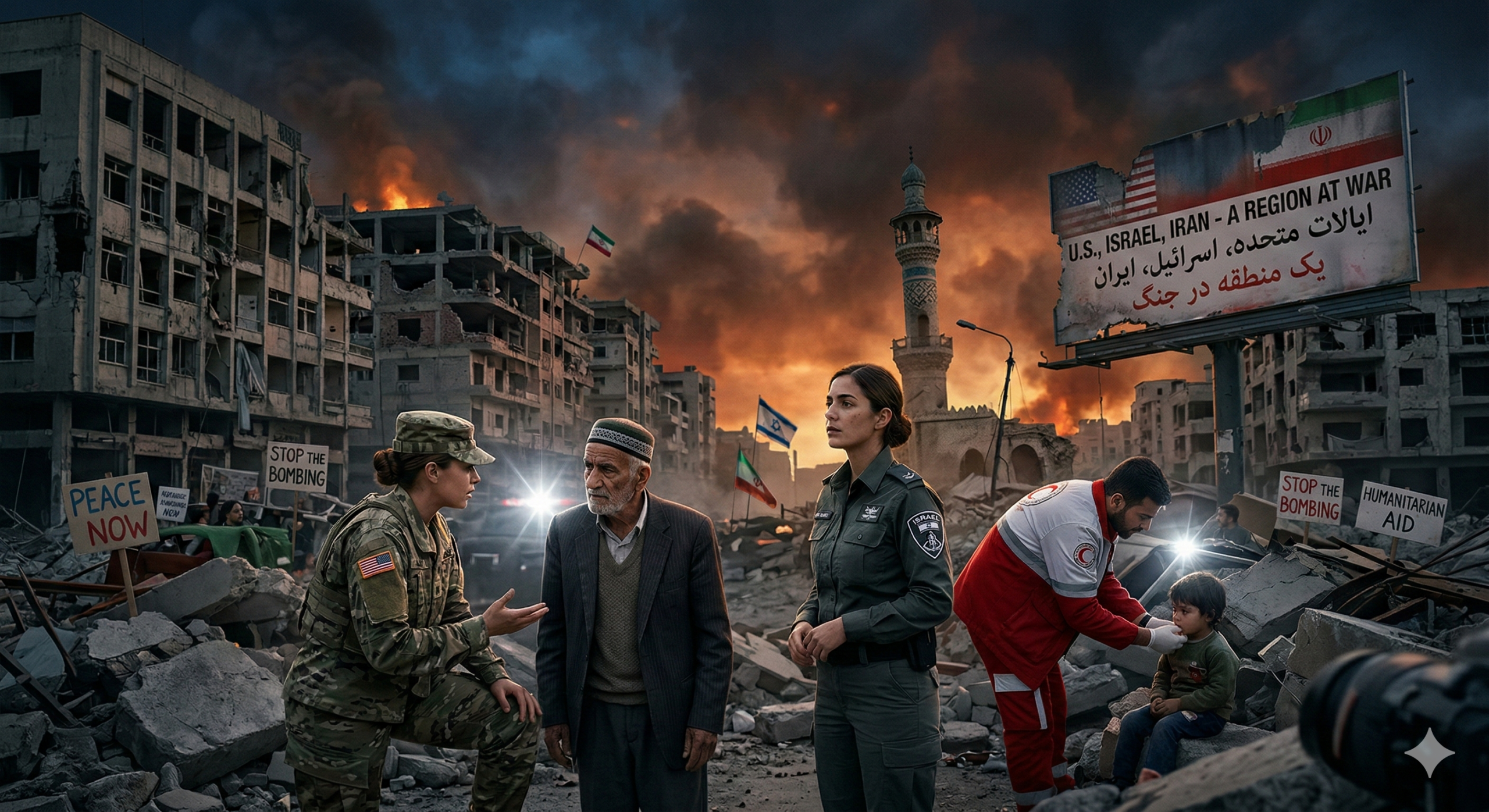
The conflict between the U.S., Israel, and Iran has escalated into a full-scale military confrontation following a massive joint strike launched on February 28, 2026. This operation, codenamed “Roaring Lion” by Israel and “Epic Fury” by the U.S. Department of Defense, has fundamentally reshaped the regional landscape.
The following synthesis provides an in-depth look at the current situation, drawing from reports by outlets such as NPR, The Washington Post, and the Center for American Progress, which generally align with a center-left or analytical perspective.
1. The Opening Salvo: Operation Roaring Lion
On the morning of February 28, a combined force of approximately 200 Israeli fighter jets and U.S. standoff weapons—including B-2 stealth bombers and Tomahawk missiles—launched a “decapitation strike” against the Iranian leadership.
-
Targeting the Leadership: The strikes focused on the Pasteur district of Tehran. Iranian state media confirmed on March 1 that Supreme Leader Ayatollah Ali Khamenei was killed, along with several family members and approximately 40 high-ranking officials, including Defense Minister Aziz Nasirzadeh.
-
Military Objectives: Beyond leadership, the coalition targeted over 500 sites, focusing on nuclear enrichment facilities, ballistic missile launchers, and air defense systems to establish “air superiority.”
-
The “Regime Change” Narrative: President Trump framed the operation as an opportunity for the Iranian people to “take back” their country, specifically citing the internal unrest and economic collapse Iran has faced since late 2025.
2. The Retaliation: A Widening Regional War
Iran’s response was immediate and widespread, shifting the conflict from a localized strike to a regional conflagration.
-
U.S. and Israeli Casualties: The Pentagon confirmed the deaths of three U.S. service members on March 1—the first American combat deaths of the conflict. In Israel, an Iranian missile strike on a synagogue in Beit Shemesh killed nine civilians.
-
Attacks on Gulf Neighbors: Iran has launched drones and missiles at 27 U.S. bases across the region. Civilian infrastructure in the UAE, Bahrain, Kuwait, and Qatar has been hit, including significant damage to Dubai International Airport and the Burj Al Arab hotel.
-
Maritime Impact: De facto suspension of traffic through the Strait of Hormuz has begun following Iranian strikes on naval vessels and tankers.
3. Center-Left Perspectives and Criticisms
Center-left analysts and editorial boards have raised significant concerns regarding the long-term viability and morality of the intervention:
-
The “Unnecessary War” Argument: Organizations like the Center for American Progress argue that the administration is leading the U.S. into an “unnecessary war” that lacks a clear endgame. They posit that air power alone cannot eliminate nuclear programs or proxy networks like Hezbollah.
-
Humanitarian Concerns: Reports from the Red Crescent indicate over 201 civilians killed and 747 injured in Iran. A disputed strike on a girls’ elementary school in Minab, which reportedly killed 148 students, has become a focal point of international condemnation.
-
Diplomatic Failure: Critics point out that the strikes effectively killed ongoing nuclear negotiations in Geneva and Oman, moving the region from “deterrence” to “destruction” without exhausting all diplomatic avenues.
-
European Hesitation: The “E3” (UK, France, and Germany) have condemned Iran’s retaliation but notably stressed that they did not participate in the initial U.S.-Israeli strikes, reflecting a deep rift in the traditional Western alliance over the decision to initiate regime change.
4. Current Status (As of March 1, 2026)
The conflict is entering its second day with no signs of de-escalation. While the U.S. administration predicts the operation could be over in “four weeks or less,” regional experts warn of a “prolonged entanglement” that could upend global trade and energy markets.